Digital Marketing: Transforming Businesses in the Modern World
The internet has changed the way businesses communicate with customers, promote their products, and build their brands. In this fast-growing digital era, digital marketing has become an essential part of business success. It allows companies to connect with their target audiences, increase brand visibility, and create new opportunities for growth.
From startups to established organizations, businesses are adopting digital marketing strategies to stay competitive and build a strong online presence.
Understanding Digital Marketing
Digital marketing refers to the promotion of products, services, and brands through online platforms and digital technologies. It includes search engines, social media networks, websites, email campaigns, and online advertisements.
Unlike traditional marketing methods, digital marketing offers businesses the ability to reach specific audiences, monitor campaign performance, and make informed decisions based on data. This makes it a valuable tool for businesses looking to improve their marketing efforts.
Why Is Digital Marketing Important?
Digital marketing helps businesses reach potential customers where they spend much of their time: online. It provides opportunities to promote services, communicate with audiences, and build lasting customer relationships.
Some key advantages of digital marketing are:
- Increased Online Visibility: Helps businesses become easier to discover on search engines and social media.
- Budget Flexibility: Allows companies to choose marketing activities that fit their available resources.
- Audience Targeting: Helps businesses connect with people who are more likely to be interested in their offerings.
- Better Customer Relationships: Encourages direct communication and meaningful engagement.
- Performance Tracking: Makes it possible to measure clicks, website traffic, leads, and sales.
- Business Expansion: Creates opportunities to reach customers in new markets and locations.
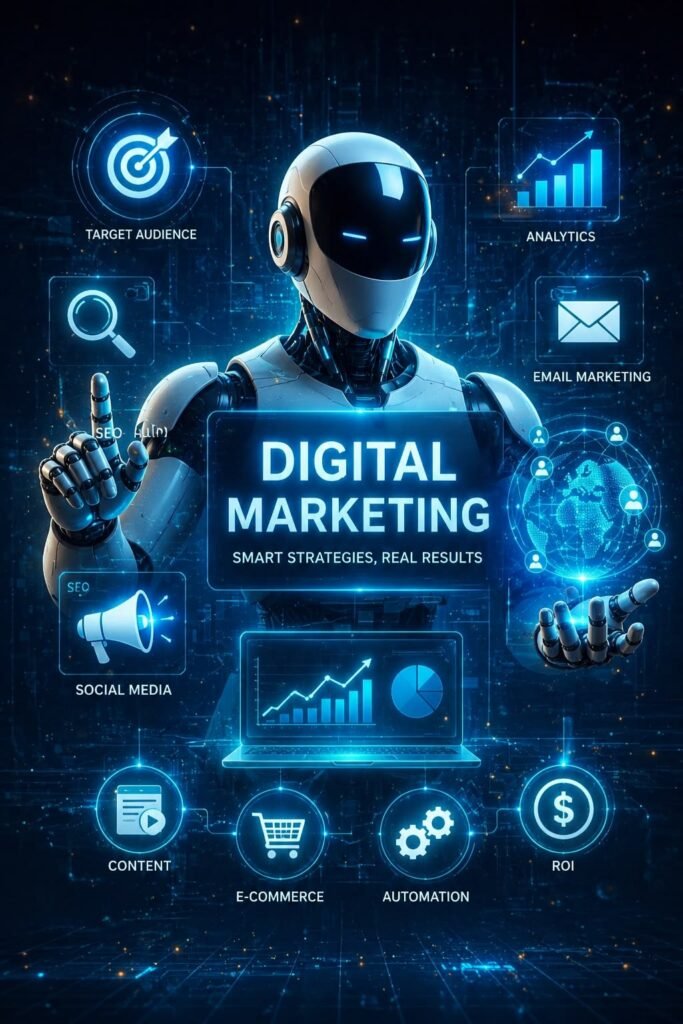
Essential Types of Digital Marketing
1. Search Engine Optimization (SEO)
Search Engine Optimization is the process of improving a website so that it can appear more prominently in relevant search results. It involves researching keywords, improving website content, optimizing page structure, and ensuring a smooth user experience.
A well-planned SEO strategy can attract relevant organic traffic and help a business build long-term visibility online.
2. Social Media Marketing (SMM)
Social Media Marketing involves promoting a business through platforms such as Instagram, Facebook, LinkedIn, and YouTube. Businesses use these channels to share updates, publish engaging content, showcase their services, and communicate with customers.
A consistent social media strategy can increase brand awareness and help businesses develop a loyal audience.
3. Paid Advertising and Google Ads
Paid advertising enables businesses to promote their products and services through sponsored placements on search engines and other digital platforms. Google Ads is a popular tool for reaching people who are searching for particular products or services.
With appropriate targeting, budget management, and campaign analysis, paid advertising can help businesses generate website visits, inquiries, and sales.
4. Content Marketing
Content marketing focuses on creating and sharing informative, relevant, and engaging material. This may include blog articles, videos, guides, infographics, and educational social media posts.
Useful content helps businesses answer customer questions, demonstrate expertise, and build credibility over time.
5. Email Marketing
Email marketing allows businesses to communicate directly with people who have subscribed to receive their messages. Companies can send newsletters, product updates, special offers, and helpful information.
When emails provide genuine value and reach the right audience, they can strengthen customer relationships and encourage repeat purchases.
6. Website Design and Development
A business website is often the first place potential customers visit to learn about a company. A professional website should be visually appealing, mobile-friendly, fast, and easy to navigate.
Effective website development supports other digital marketing activities by providing visitors with a reliable place to explore services, request information, and make purchases.
How Artificial Intelligence Is Changing Digital Marketing
Artificial Intelligence is creating new possibilities for digital marketers. AI-powered tools can assist with content planning, keyword research, customer support, audience analysis, and advertising optimization.
These technologies help marketers work more efficiently and identify useful insights from large amounts of data. However, human creativity, careful research, and fact-checking remain essential for producing trustworthy and meaningful marketing content.
Businesses should also use customer information responsibly and protect user privacy when adopting AI-powered solutions.
Career Opportunities in Digital Marketing
Digital marketing is a growing professional field that offers opportunities for students, freelancers, entrepreneurs, and experienced professionals.
Some popular career options include:
- SEO Specialist
- Social Media Manager
- Digital Marketing Executive
- Google Ads Specialist
- Content Marketing Strategist
- Website Developer
- Digital Marketing Consultant
Beginners can start by learning the fundamentals, practicing with digital tools, completing small projects, and developing a portfolio. Practical experience, creativity, communication skills, and continuous learning can help individuals progress in this field.
The Future of Digital Marketing
Digital marketing will continue to evolve as technology and customer behavior change. Artificial intelligence, video content, personalized experiences, marketing automation, and data-driven decision-making are expected to remain important areas of development.
Businesses will need to focus on understanding customer needs, creating useful content, maintaining transparency, and adapting to new digital platforms.
Organizations that combine technology with genuine customer understanding will be better equipped to build trust and achieve sustainable growth.
Conclusion
Digital marketing has become a powerful way for businesses to establish their identity, connect with customers, and expand their reach. By combining SEO, social media marketing, paid advertising, content creation, and website development, companies can create effective strategies that support their business objectives.
Whether you are starting a business, developing professional skills, or improving an existing brand, understanding digital marketing can open the door to valuable opportunities.
In a world where customers increasingly discover businesses online, a strong digital marketing strategy can be an important step toward long-term success.